

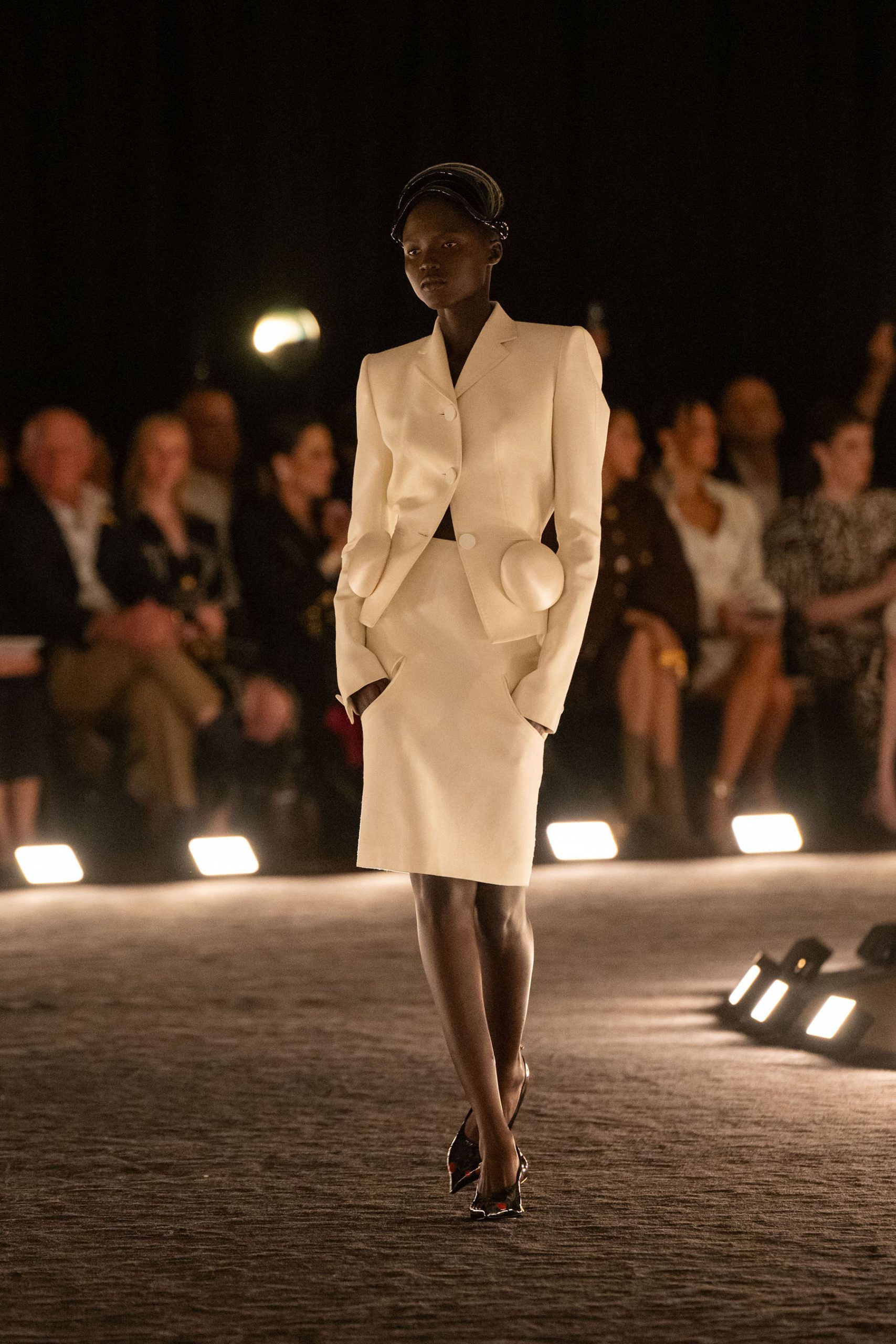
This past Friday, October 3rd, Daniel Roseberry unveiled Schiaparelli’s Spring–Summer 2026 ready-to-wear collection at Paris Fashion Week, titled Dancer in the Dark. The show took place at the Centre Pompidou, in the very same gallery that had hosted the Brancusi retrospective just 18 months earlier: a setting chosen not to highlight a direct dialogue between fashion and art, but rather to remind us that attending a Schiaparelli show should feel like visiting a museum—an experience that is inspiring, ambitious, intimate, and liberating, like dancing in the dark.
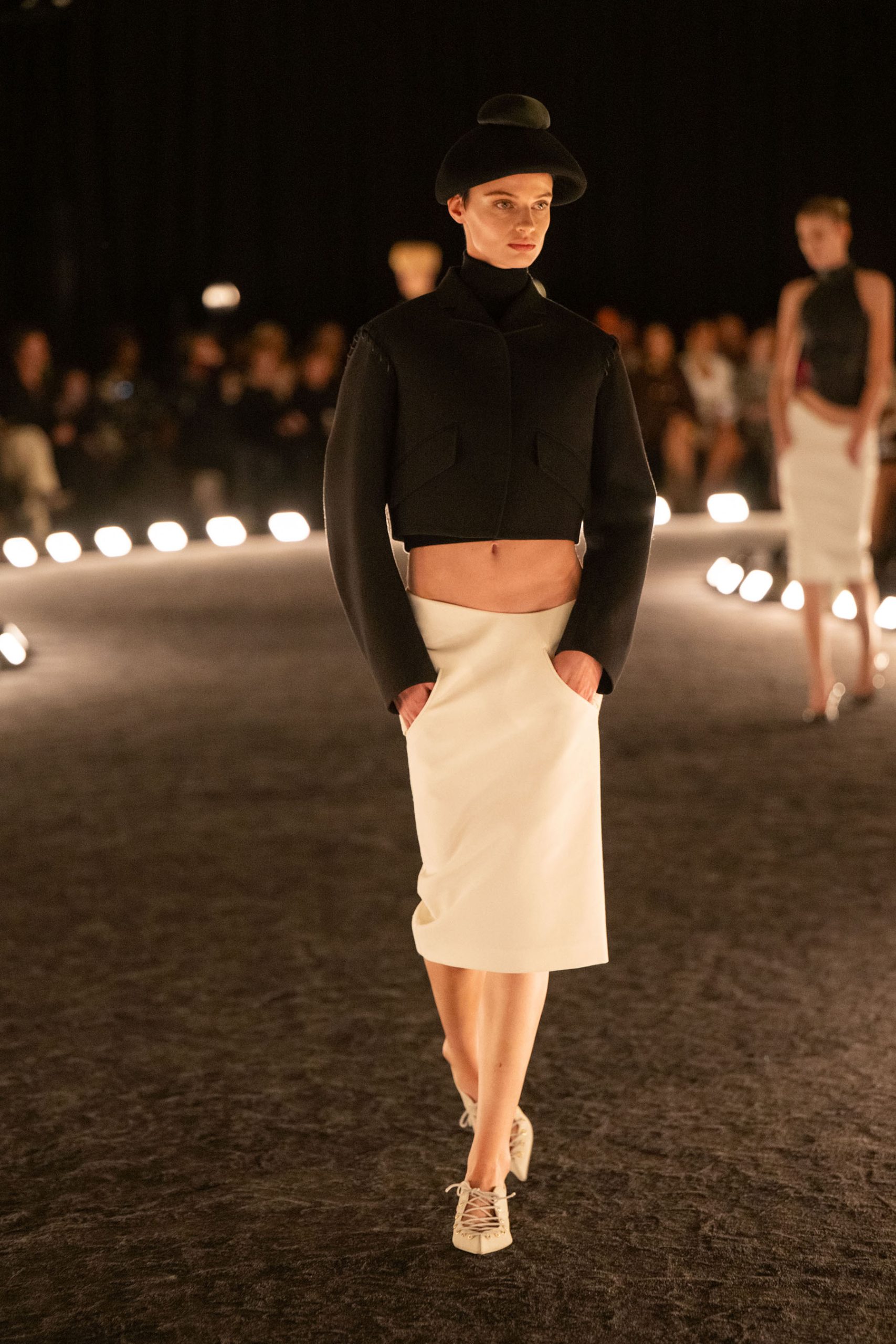
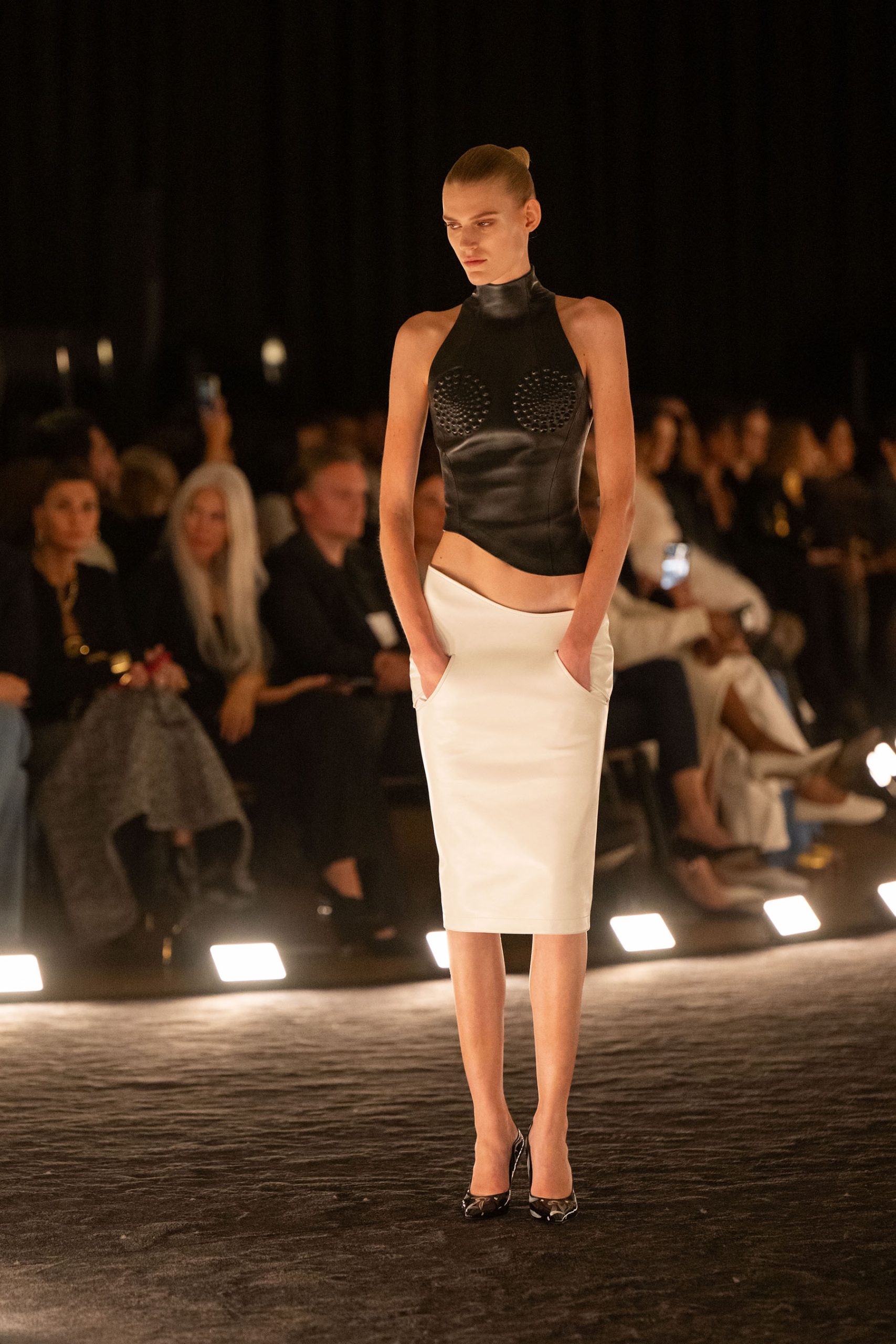
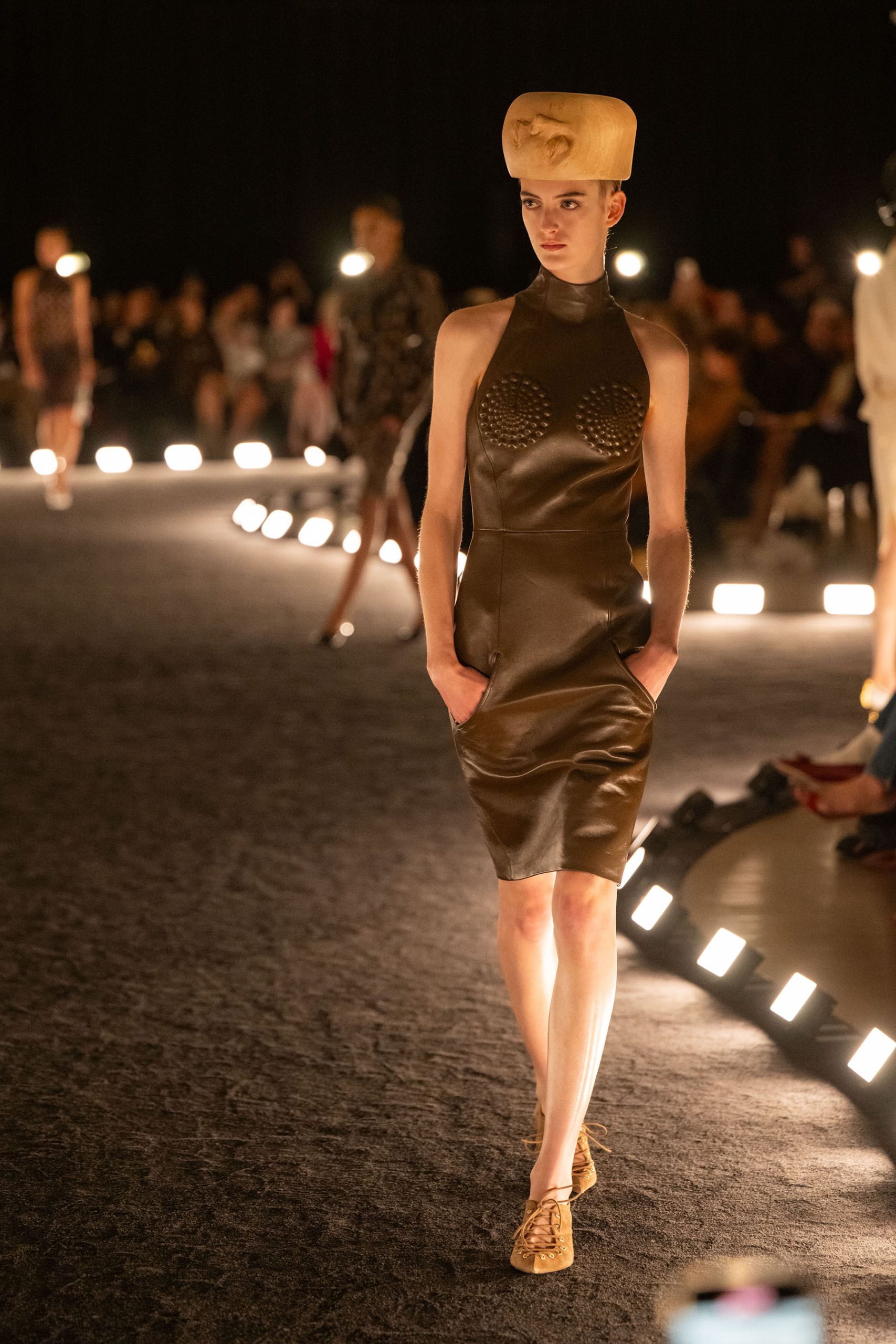
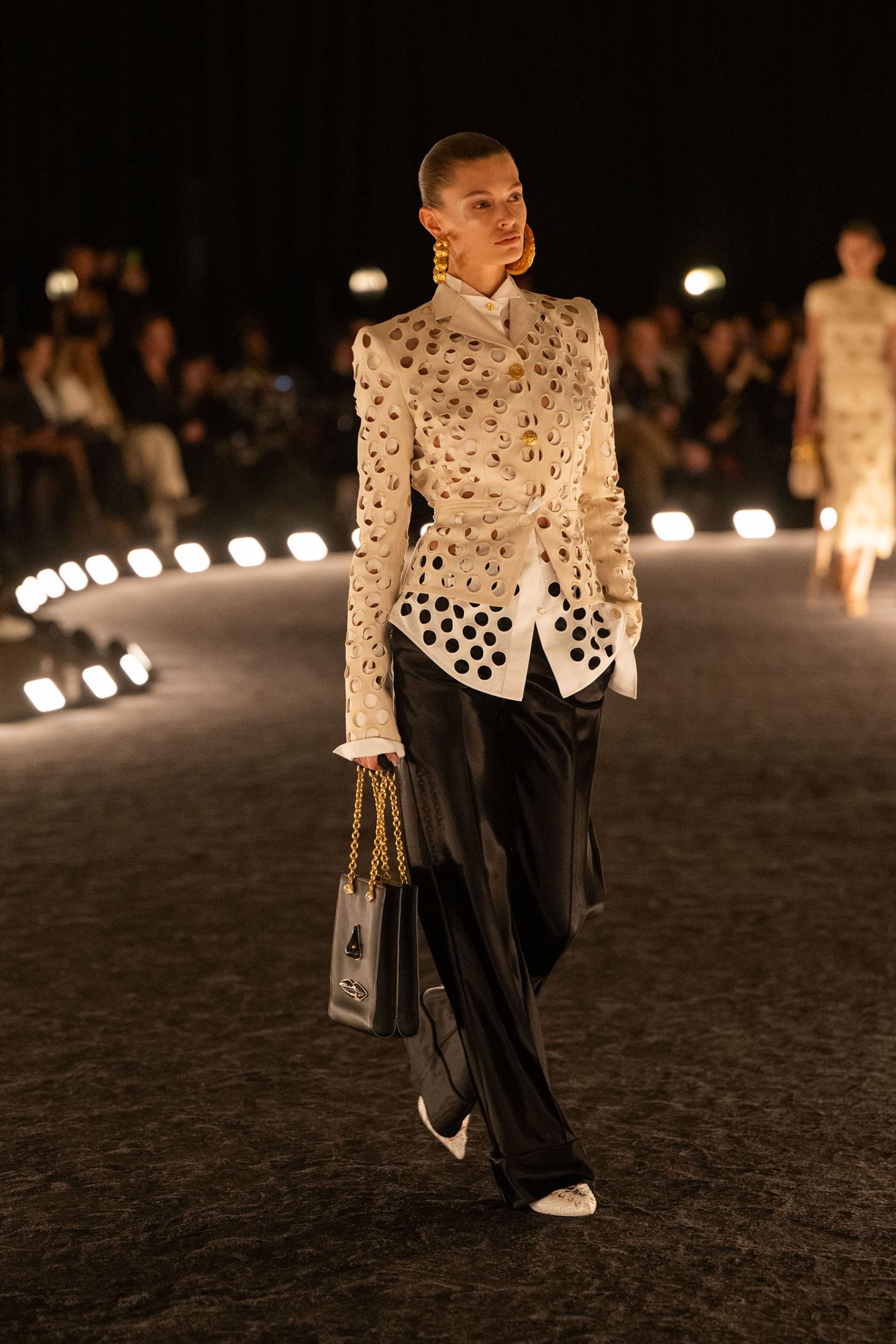
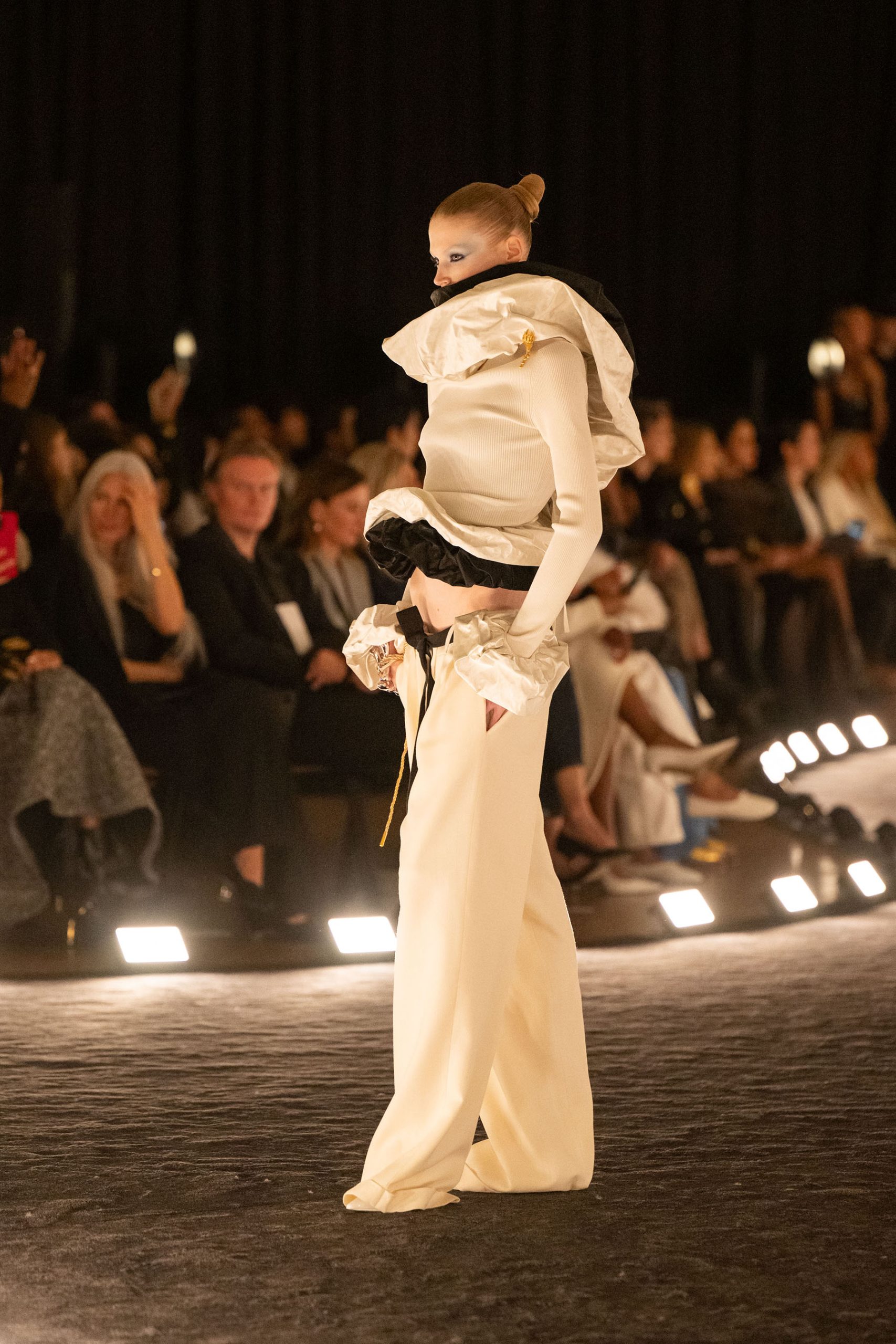
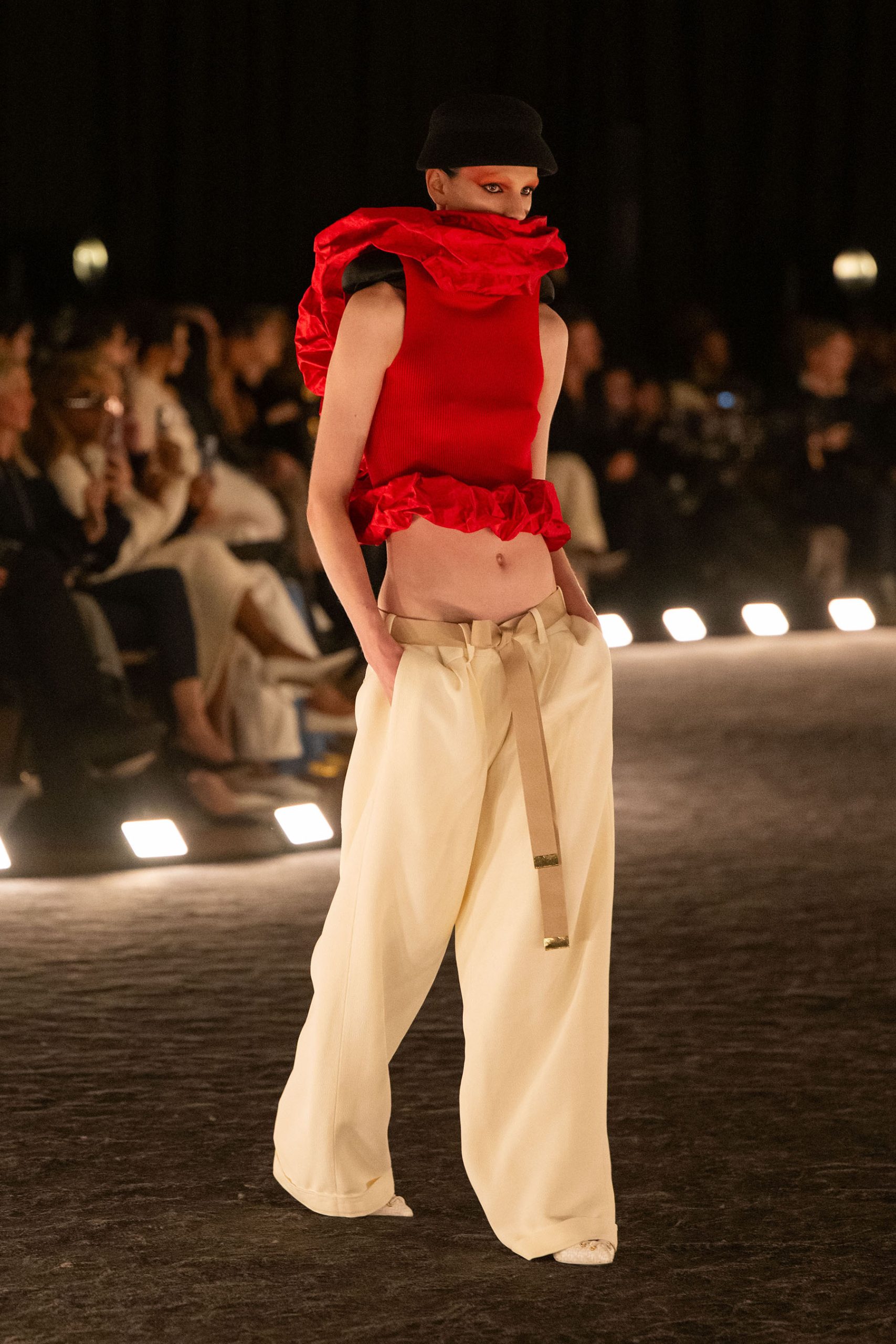
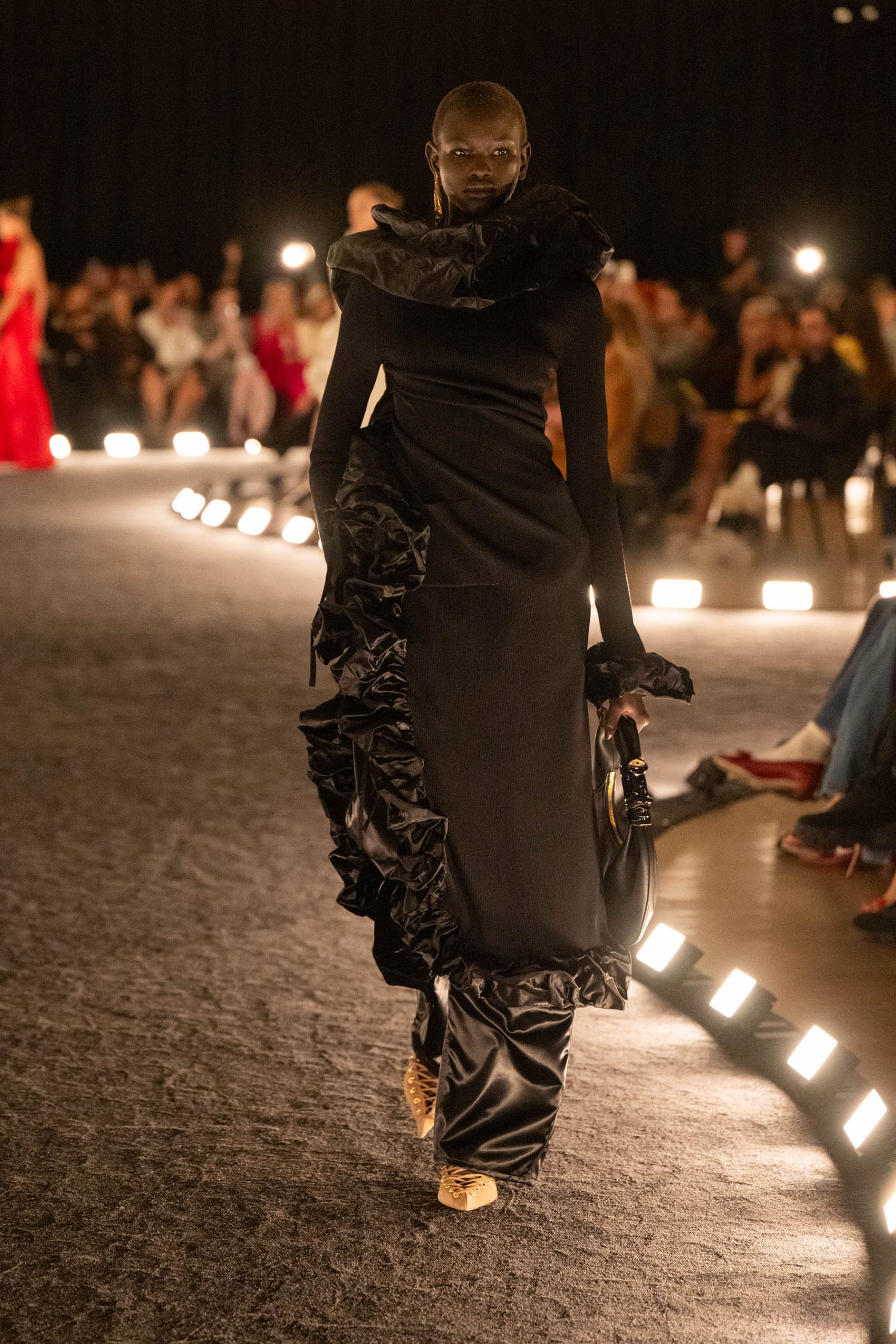
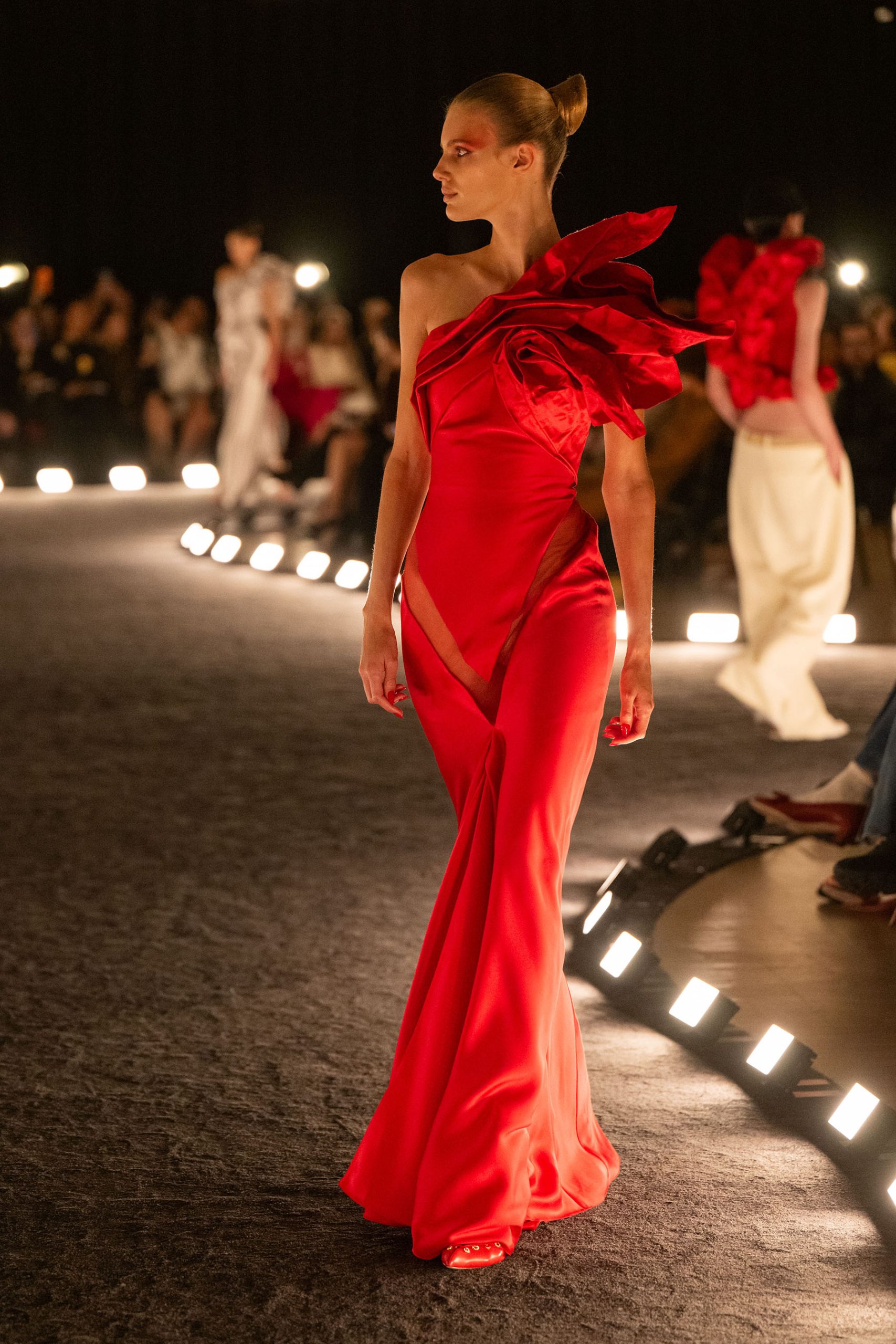
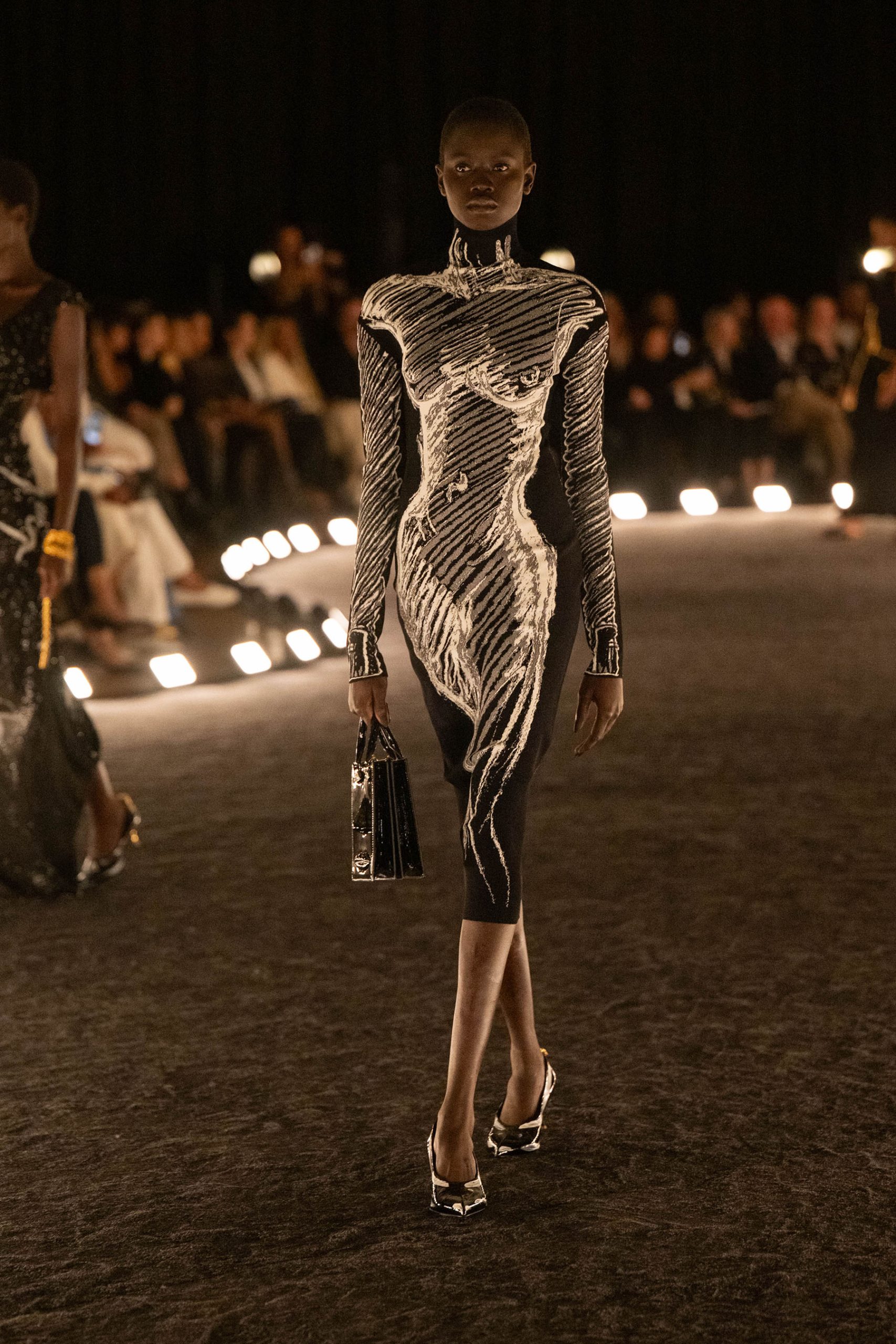
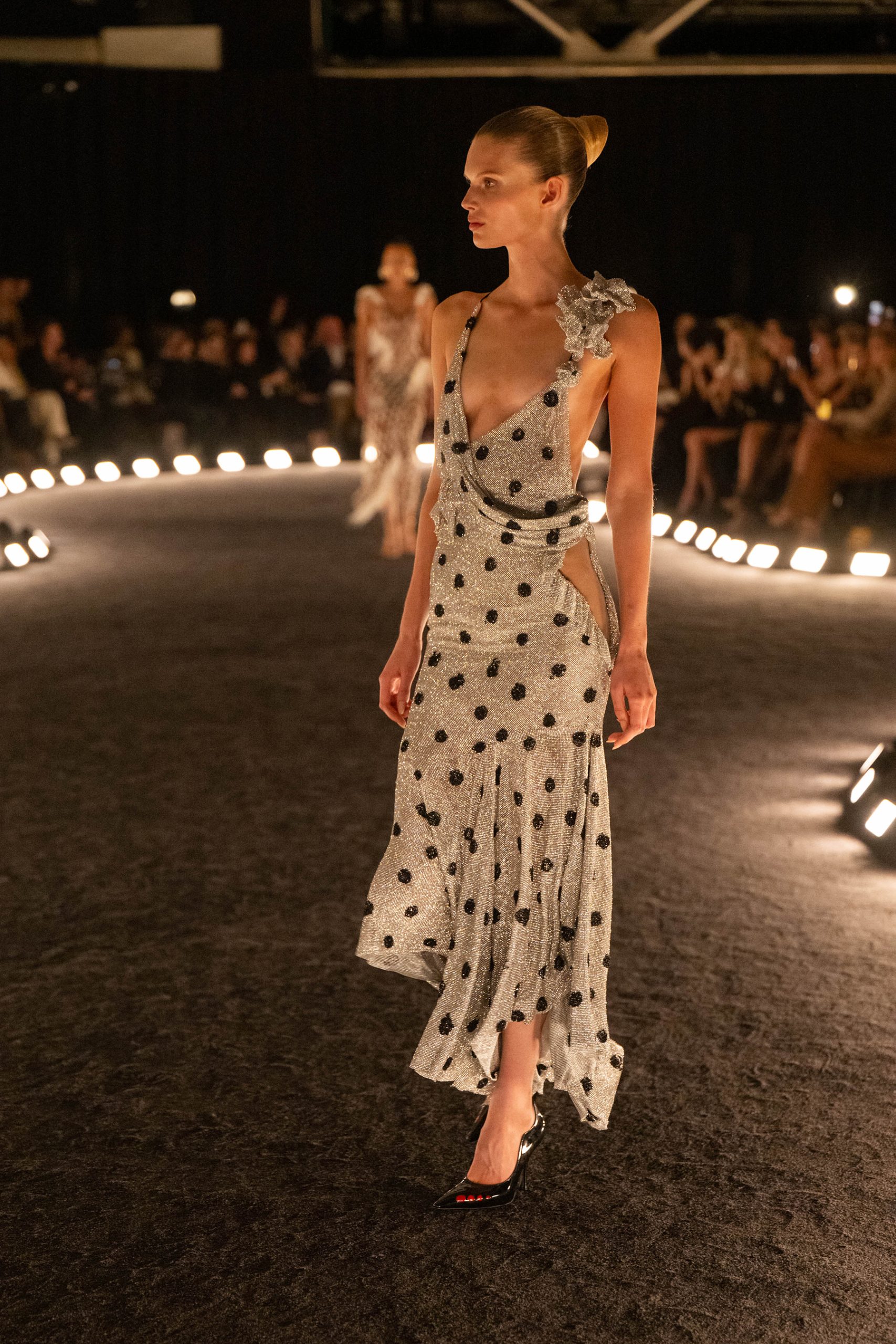
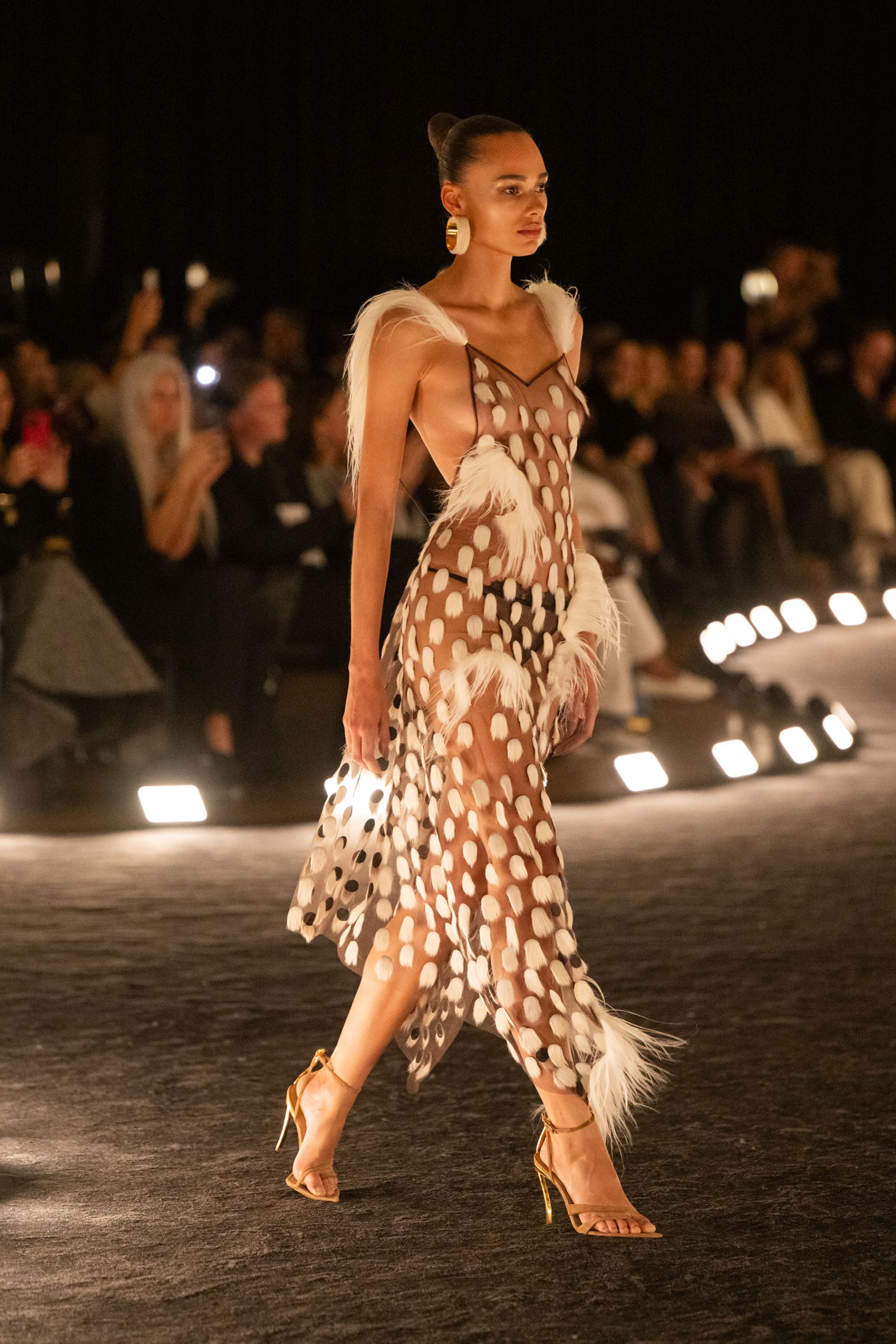
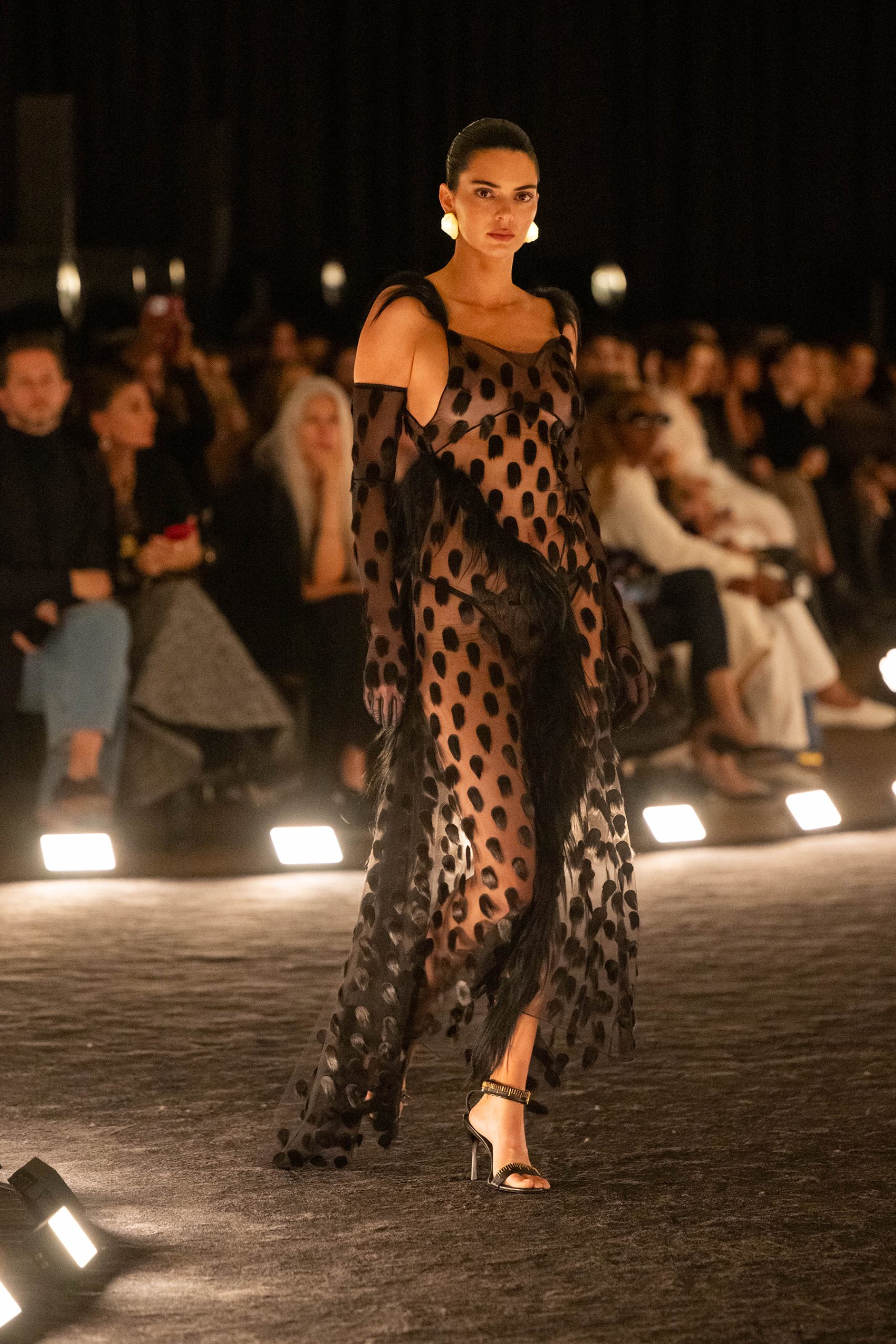
With this collection, Roseberry once again delves into tension and unexpected friction. The Schiaparelli jacket—pared-back, sharp-shouldered, stripped of unnecessary embellishment—embodies that tailleur rigoureux which sets the tone for a “hard chic” carried through into long, streamlined dresses in shades of black, bone white, and crimson red. At the heart of the collection are trompe-l’œil tricolor jacquards, a direct nod to Elsa’s own fabrics, while accessories—from sculptural shoes to new iterations of the Secret bag with its soft, Dalí-esque volumes—complete the narrative with the same evocative force. As creative director Daniel Roseberry explains:
“I recently read that while cinema attendance has plummeted in recent years, museum attendance has skyrocketed. That made sense to me. Our phones have become sanctuaries of fleeting emotions, with a shelf life of only a few hours.
And yet—is that really what we want? I think we know, intuitively, that there’s an inherent and urgent value in placing our present moment within the context of a larger narrative. Perhaps what people long for today is less entertainment and more inspiration. Entertainment is not only omnipresent, it’s inescapable. But inspiration—true inspiration—feels rare, precious, and scarce.
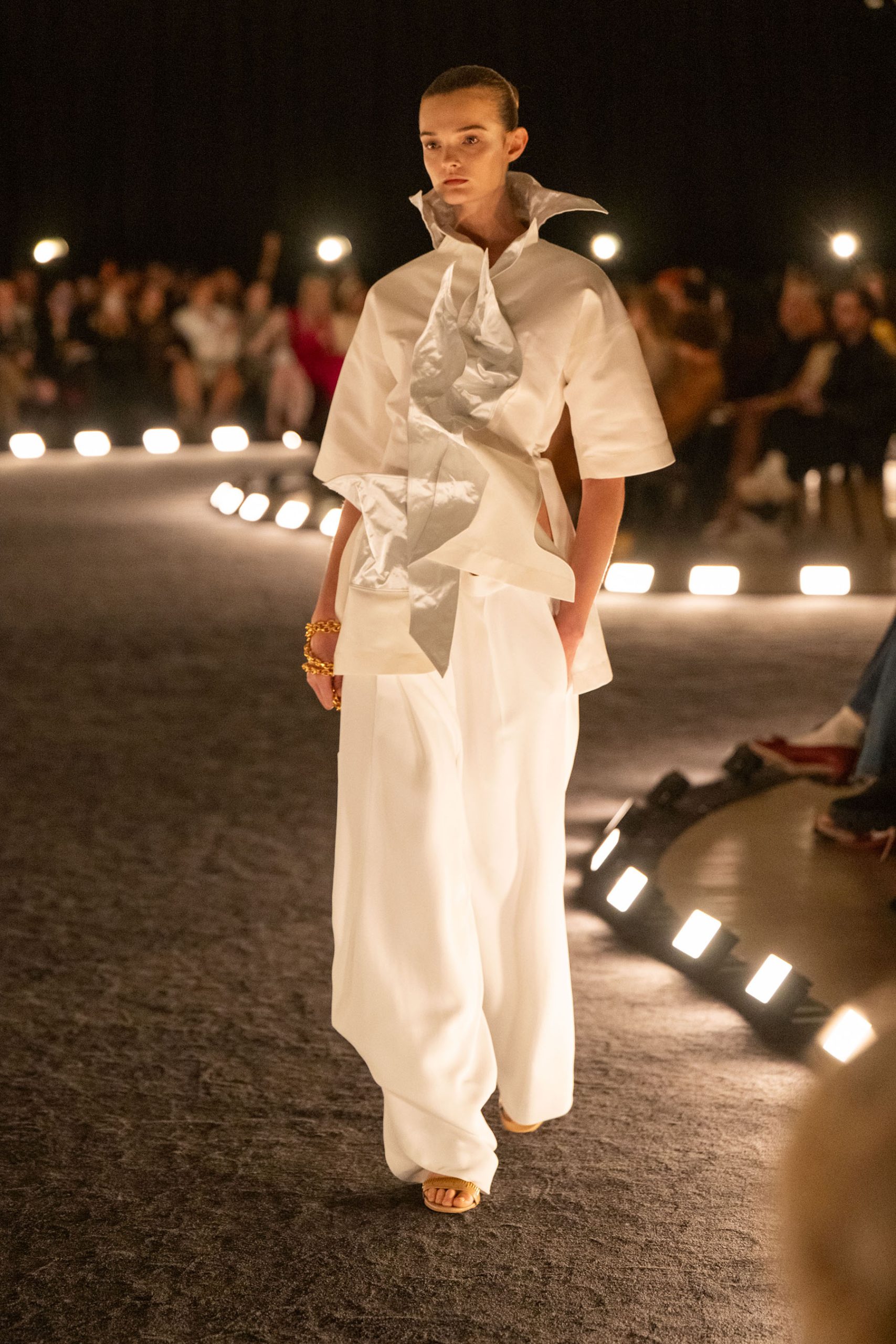
That’s why I seized the opportunity to stage the show at the Centre Pompidou, in the same gallery that had hosted the Brancusi retrospective just 18 months before. Not because I wanted this collection to focus explicitly on the relationship between fashion and art, but because I believe, and still believe, that attending a Schiaparelli show should feel like visiting a museum: equally inspiring, ambitious, and comforting. It should awaken the feeling of dancing alone at home after work. It should be like dancing in the dark: just as liberating, just as private, just as joyful.
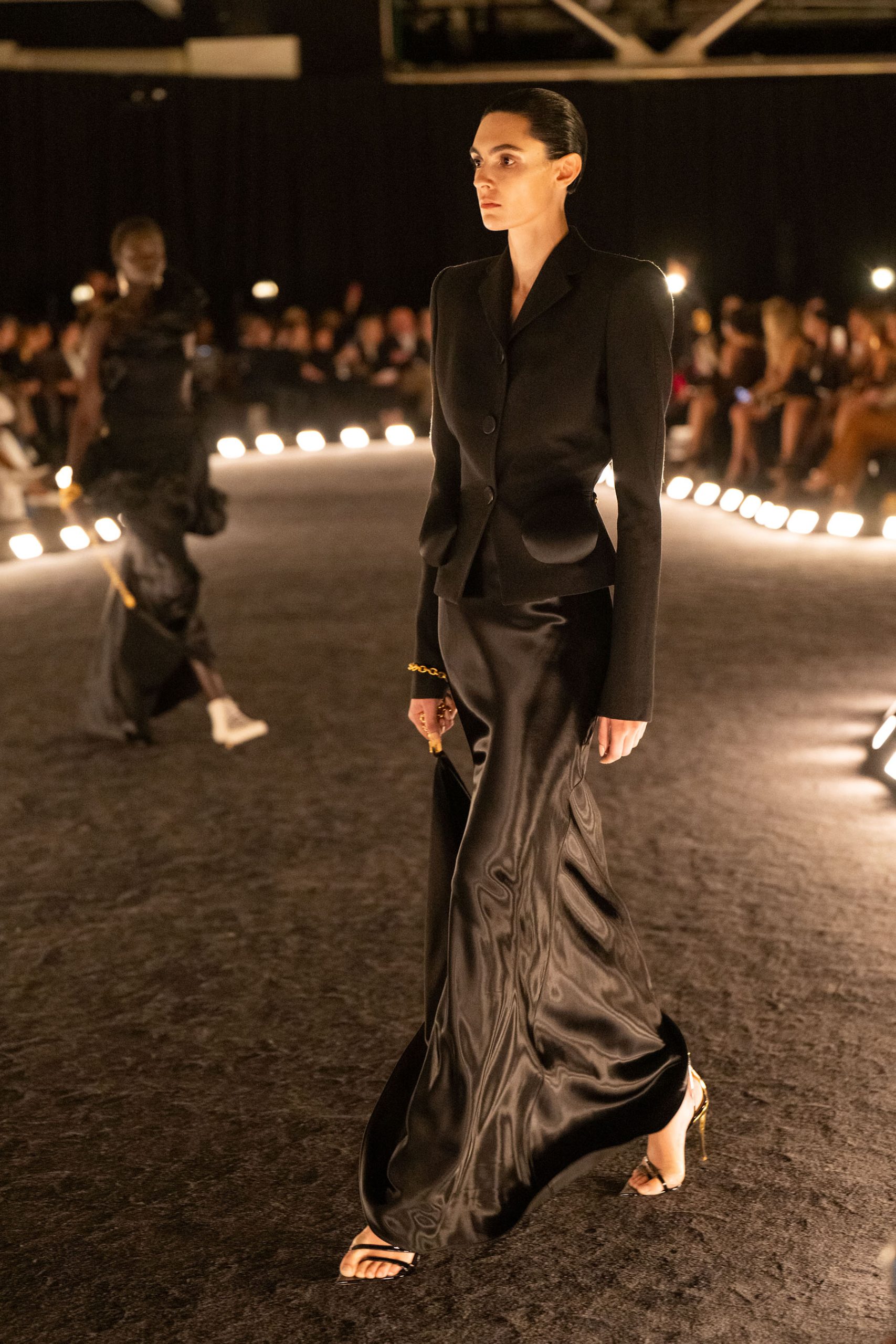
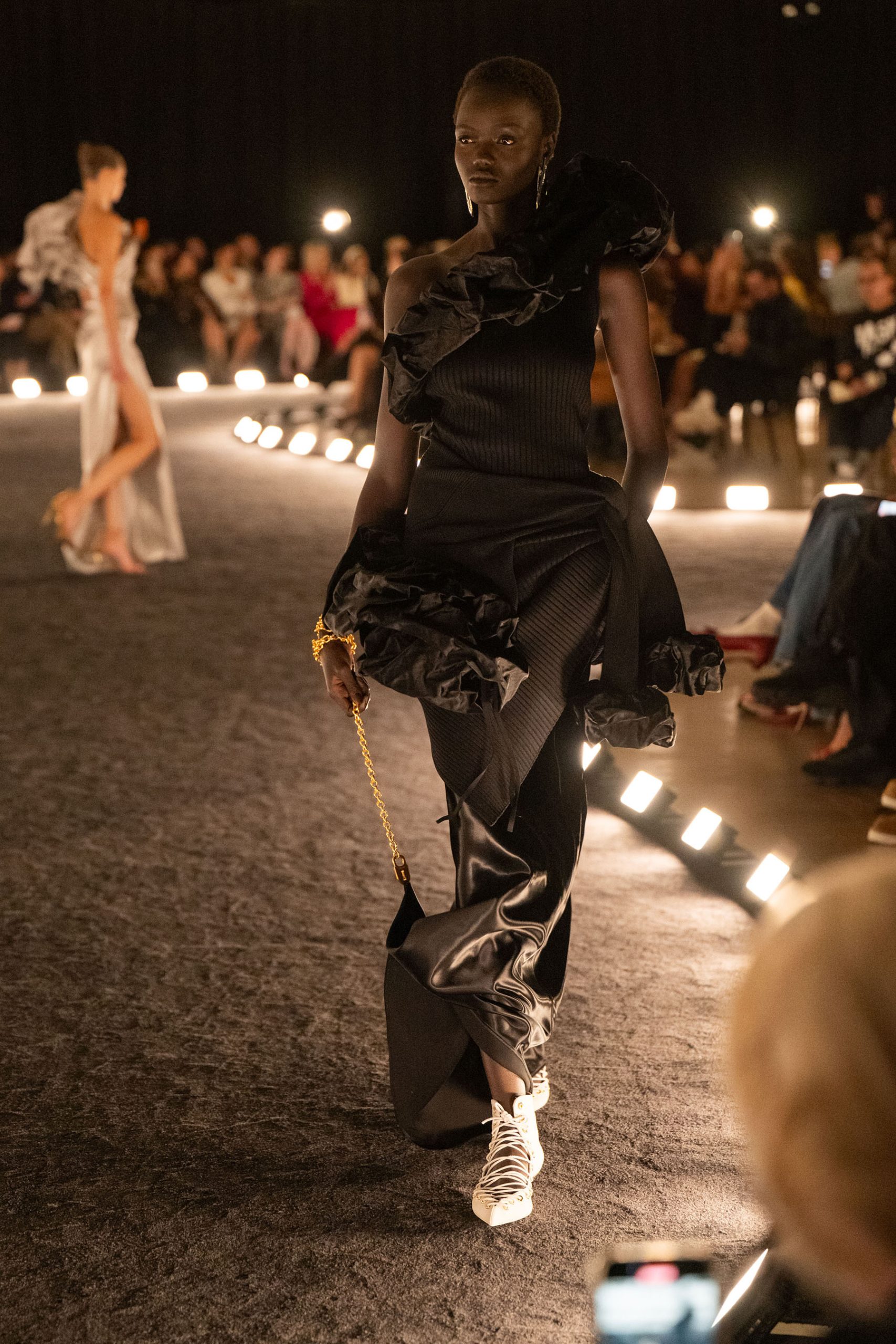
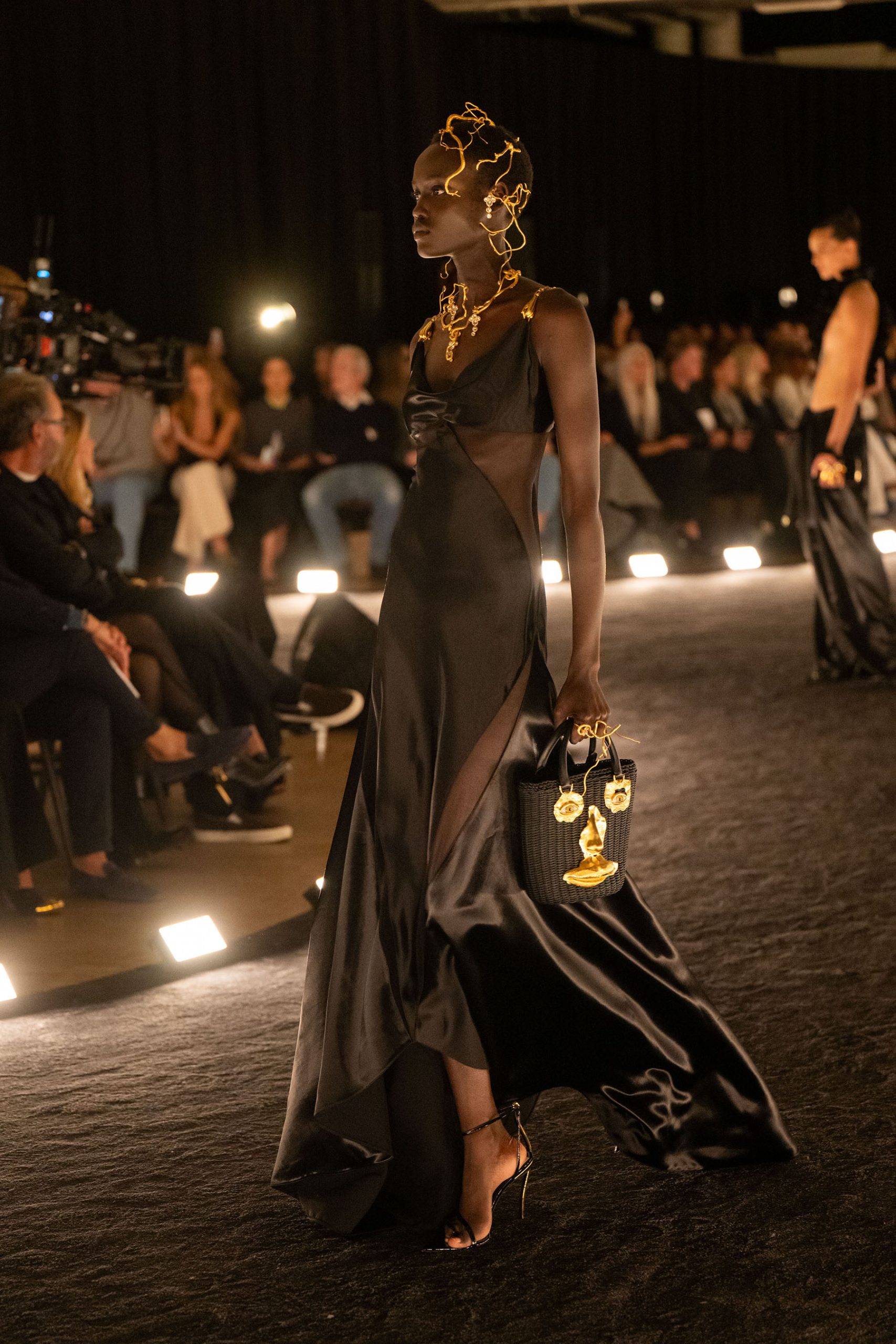
Schiaparelli RTW has always lived at the crossroads of commercial potential and creative catharsis. Elsa was never an architect of new silhouettes—that was never the point. She wasn’t a brand-marketing genius either. But she was a genius in her dialogue with culture. She was, as Yves Saint Laurent once said of her, ‘a comet lighting up the Parisian night sky, determined to dominate.’
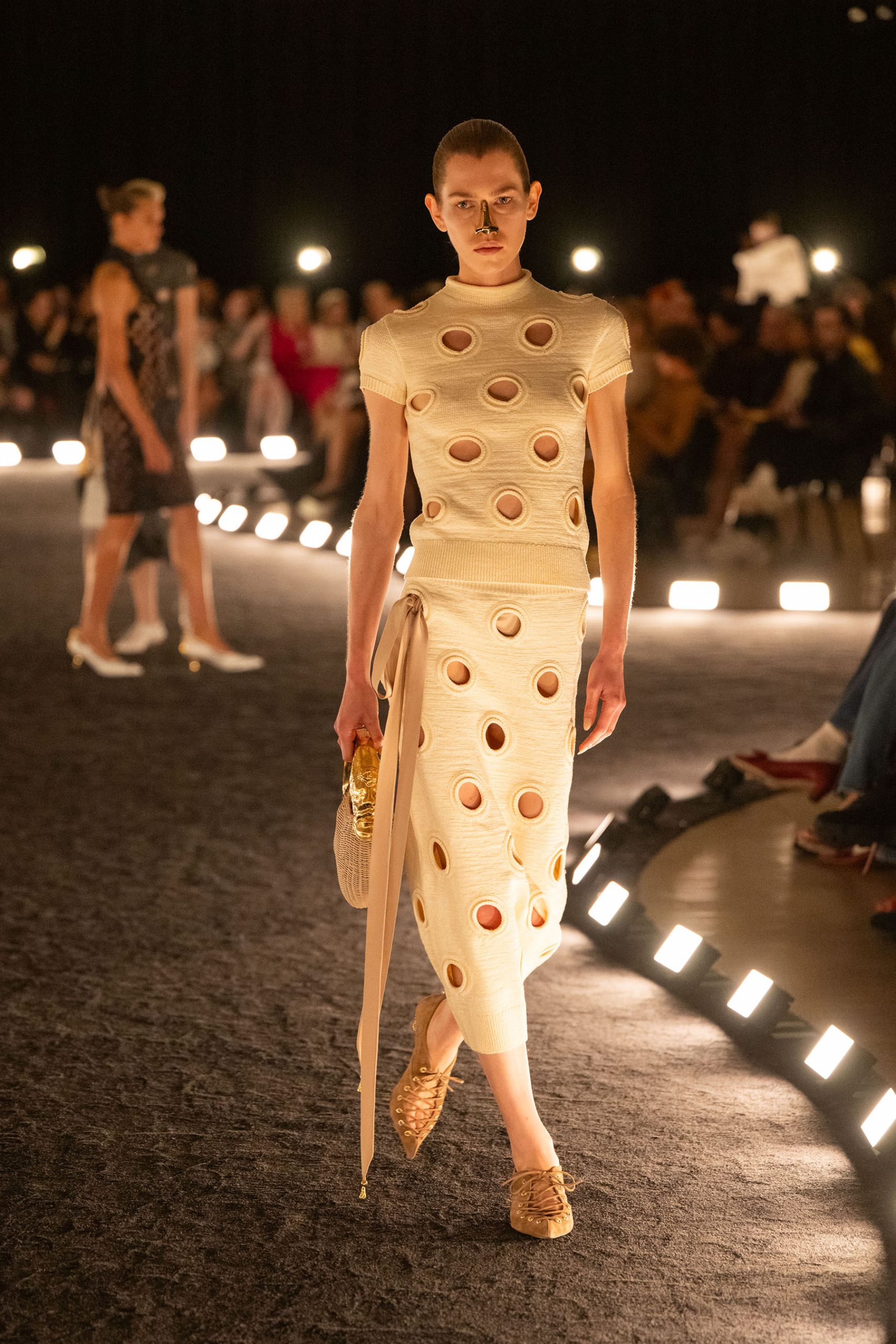
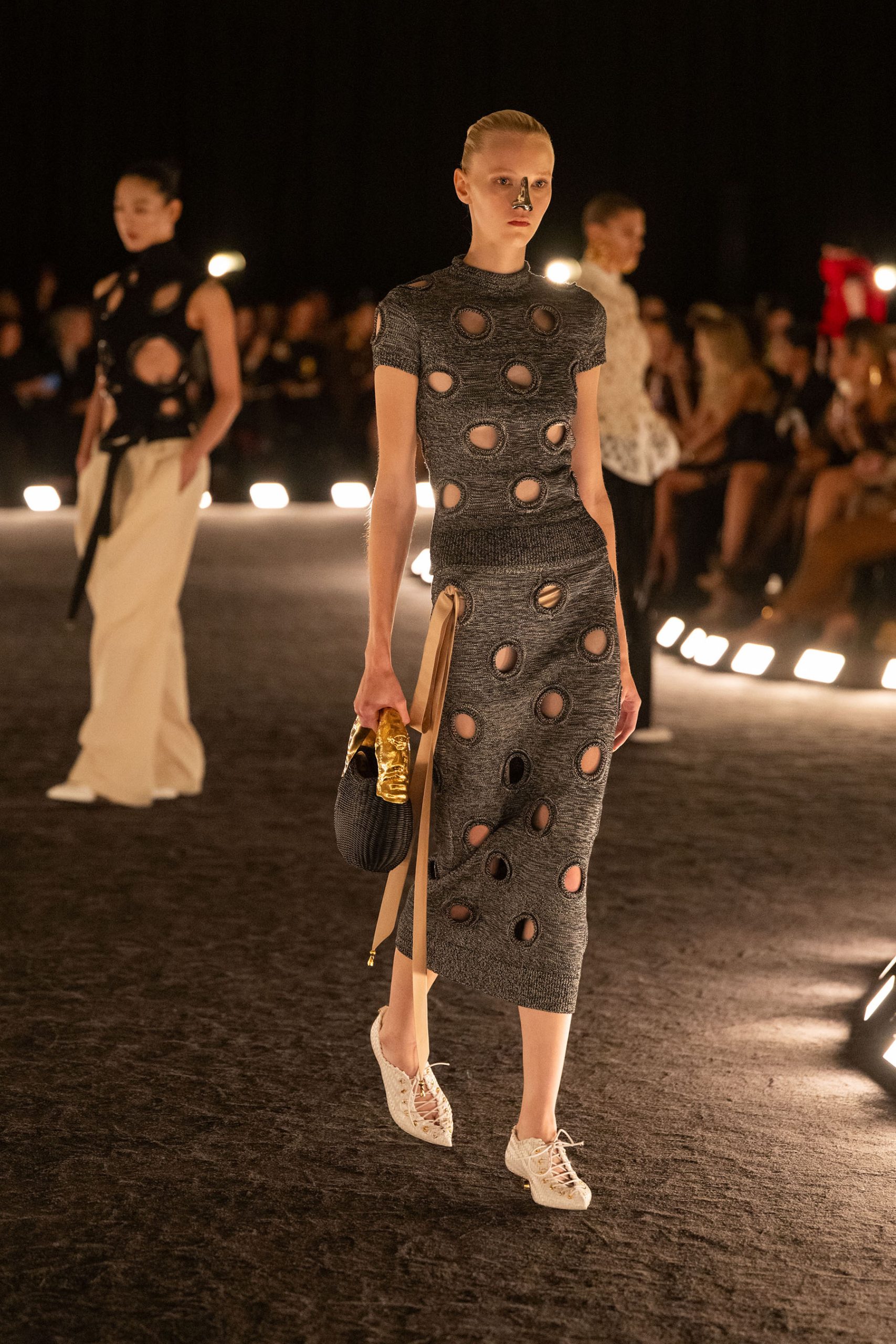
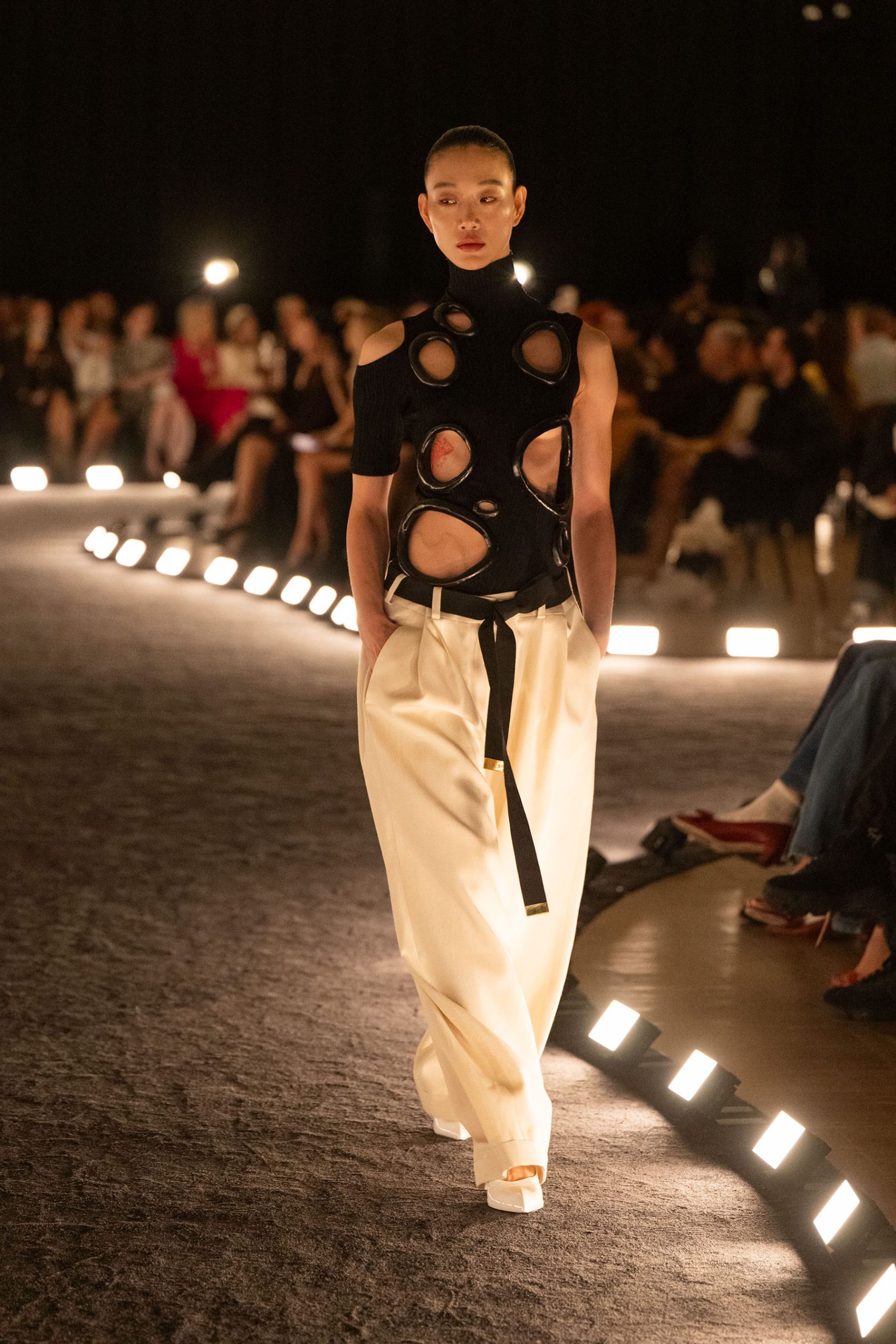
In this collection, you’ll see her love of tension, of unexpected frictions. You’ll see it in the Schiaparelli jacket: stark, pure, sharp-shouldered, free of flamboyant flourishes—a celebration of discipline itself, with its controlled silhouette (or tailleur rigoureux, as we call it in the atelier). That ‘hard chic’ continues into a series of long, refined dresses. Though they represent a kaleidoscope of techniques, they are bound together by a defined palette of black, bone white, and crimson red. And at the core of this collection are trompe-l’œil knits, lifted from my own drawings over the past months and rendered in tricolor jacquards, a tribute to Elsa’s fabrics. Striking then, striking now.
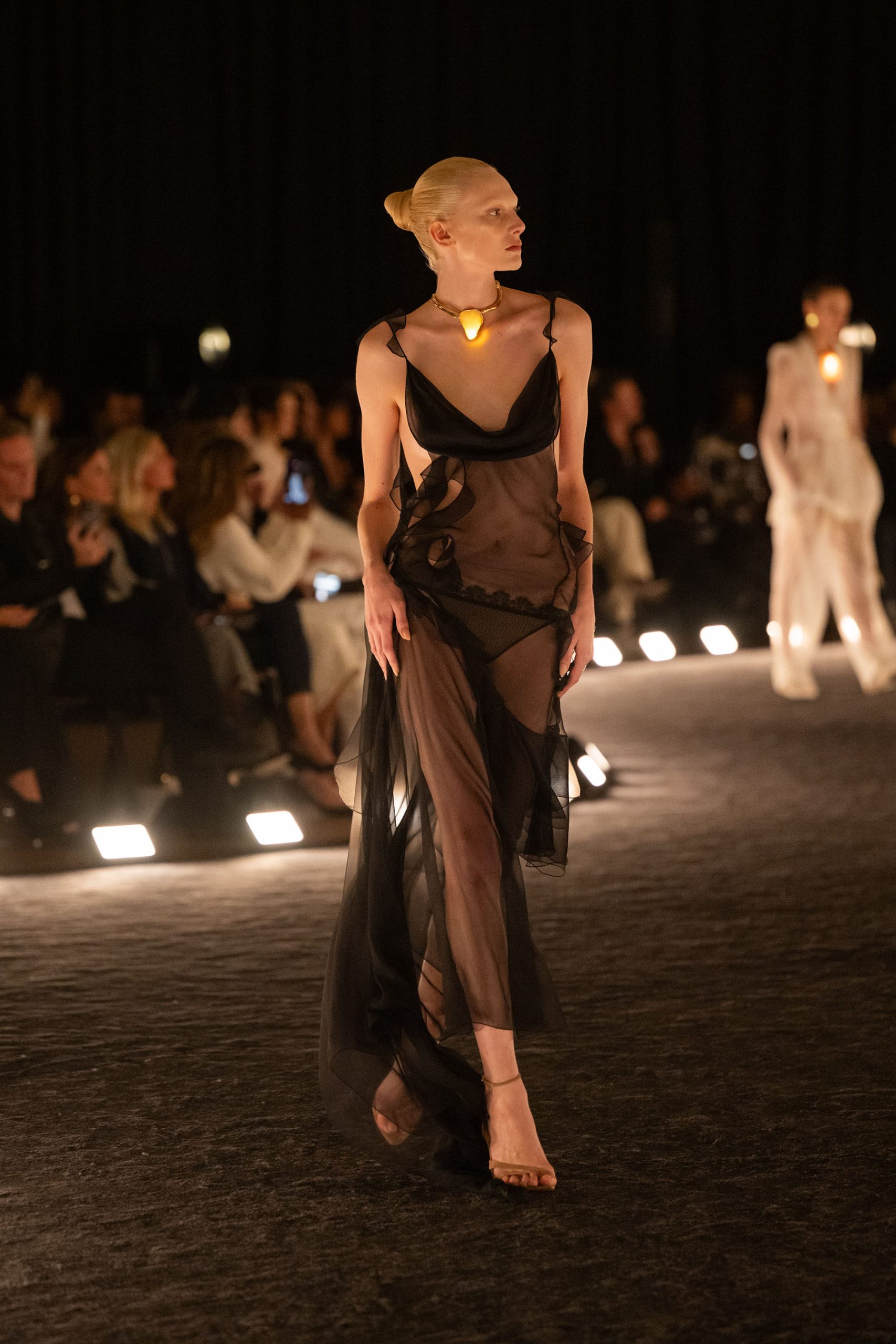
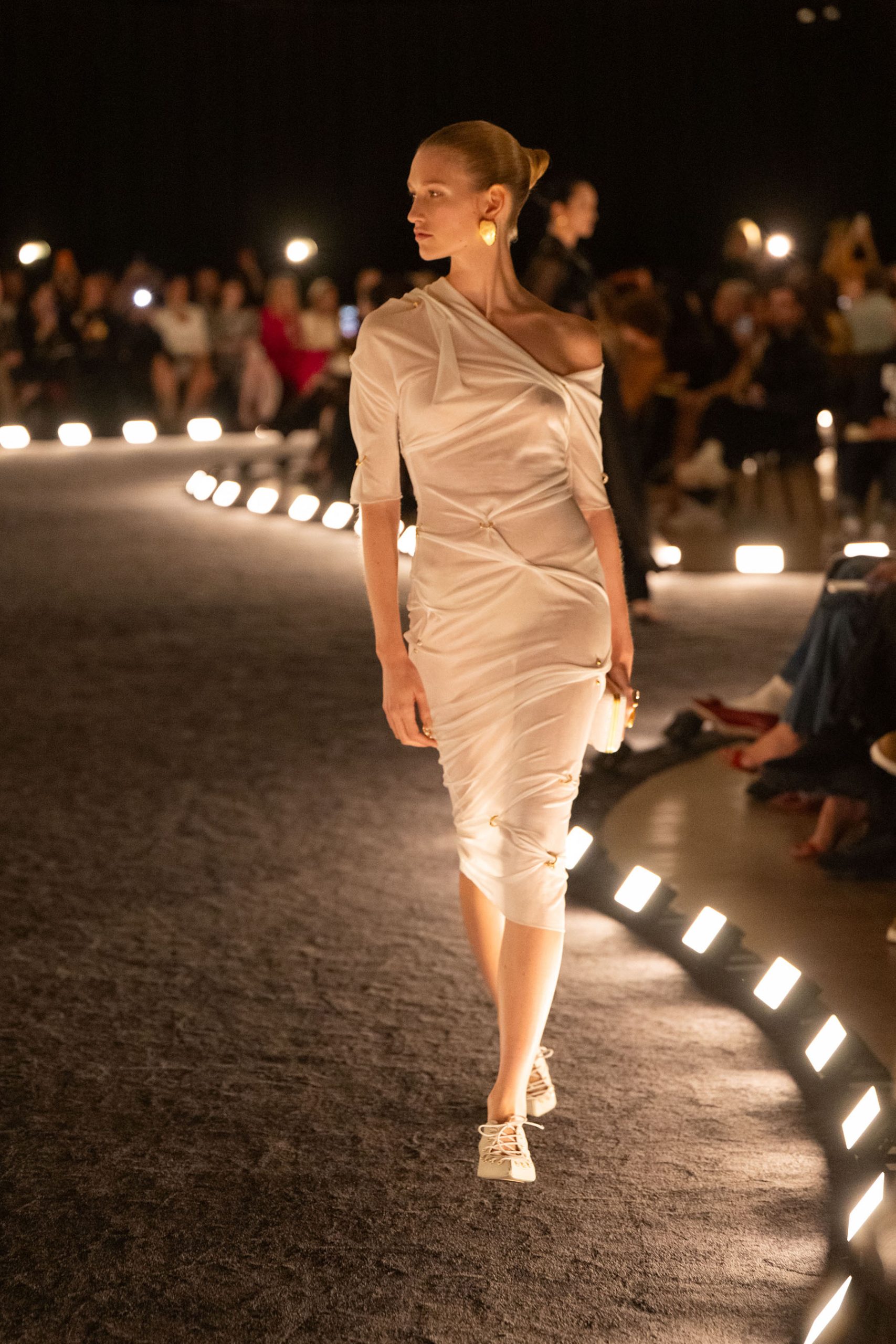
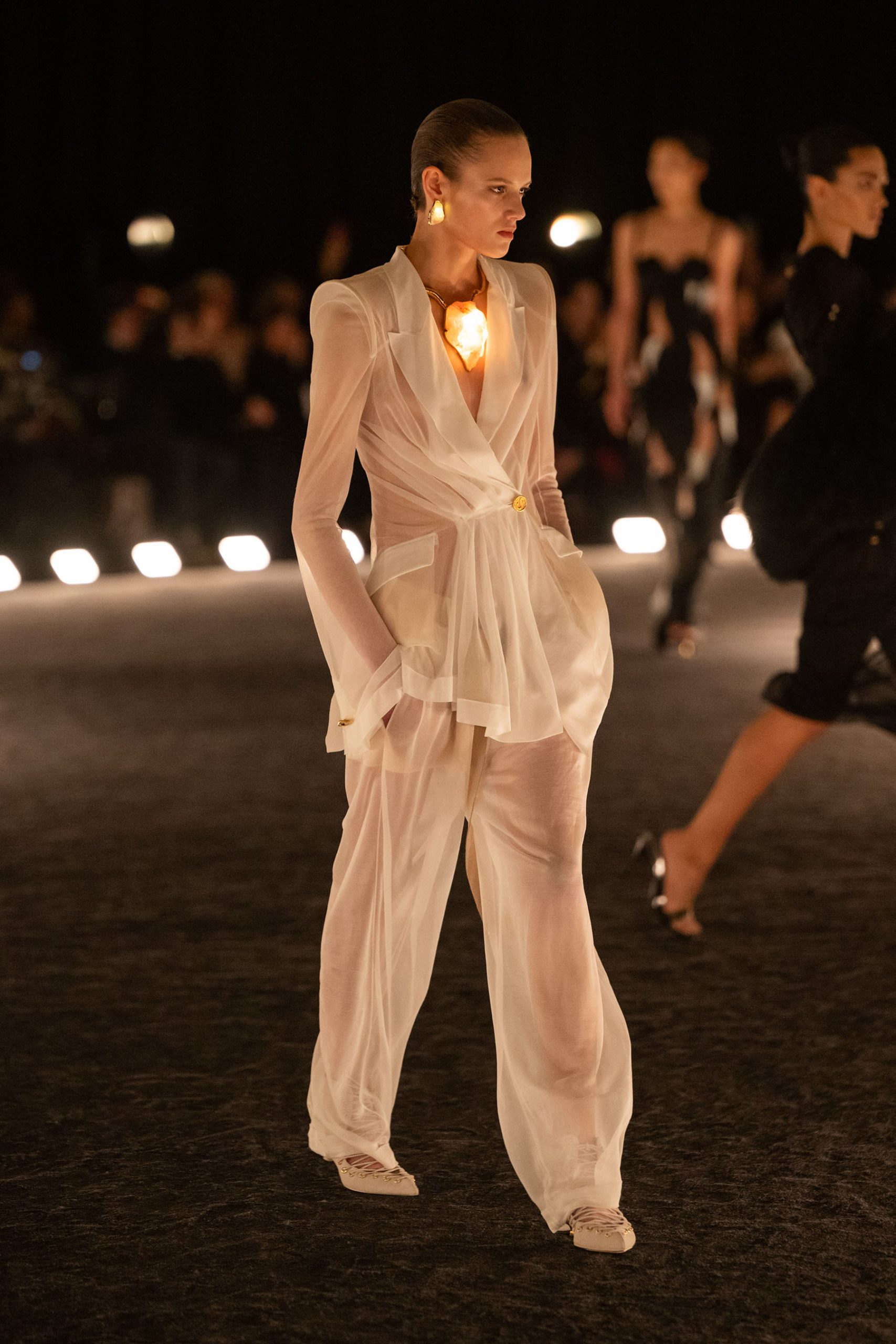
Accessories are equally crafted to recall, surprise, and delight—from shoes to new incarnations of Secret, our padlocked handbag, this season imagined in softened volumes evoking Dalí’s melting clocks. Every shoe and bag begins as a drawing, and I believe you can both see and feel that in the finished pieces.
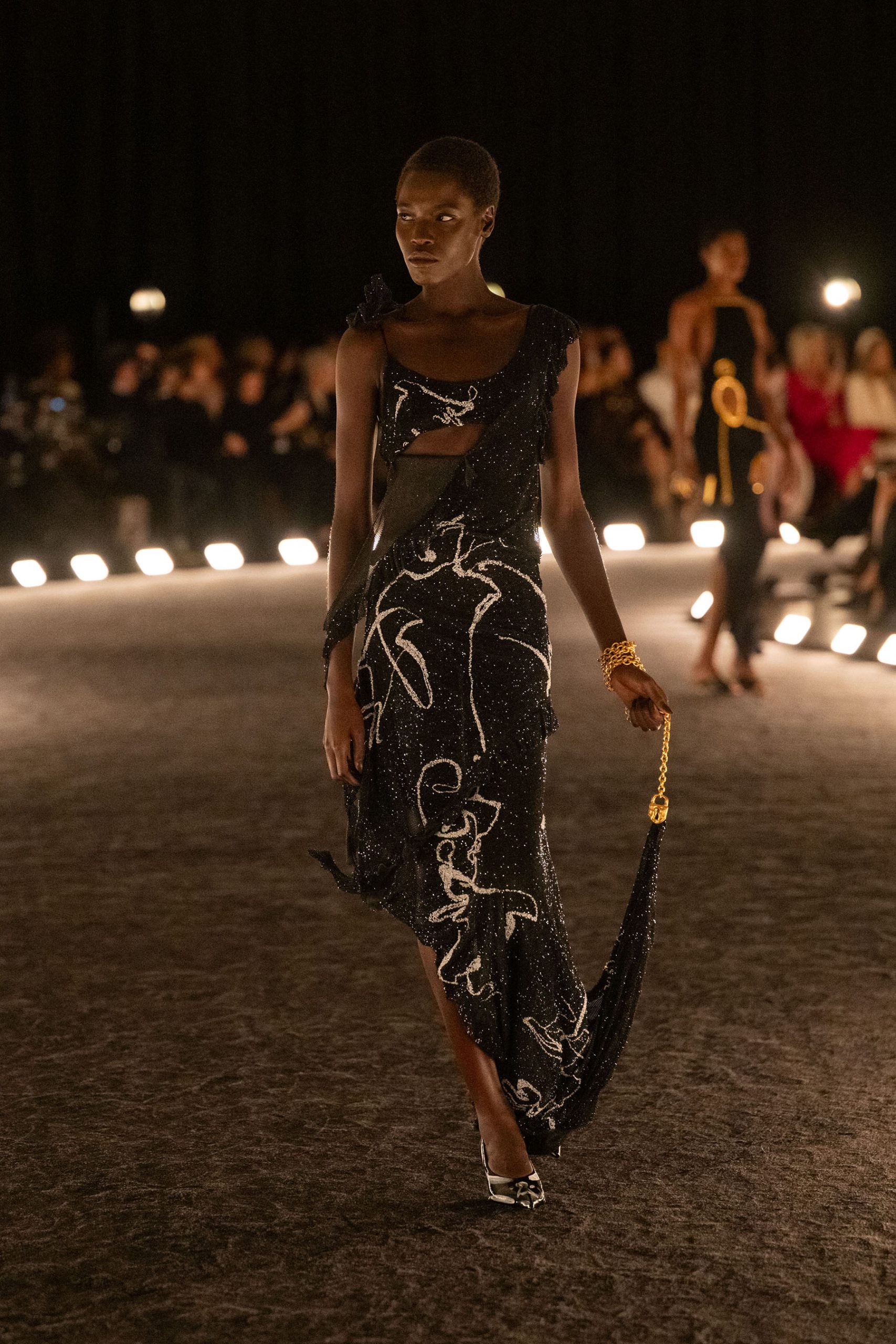
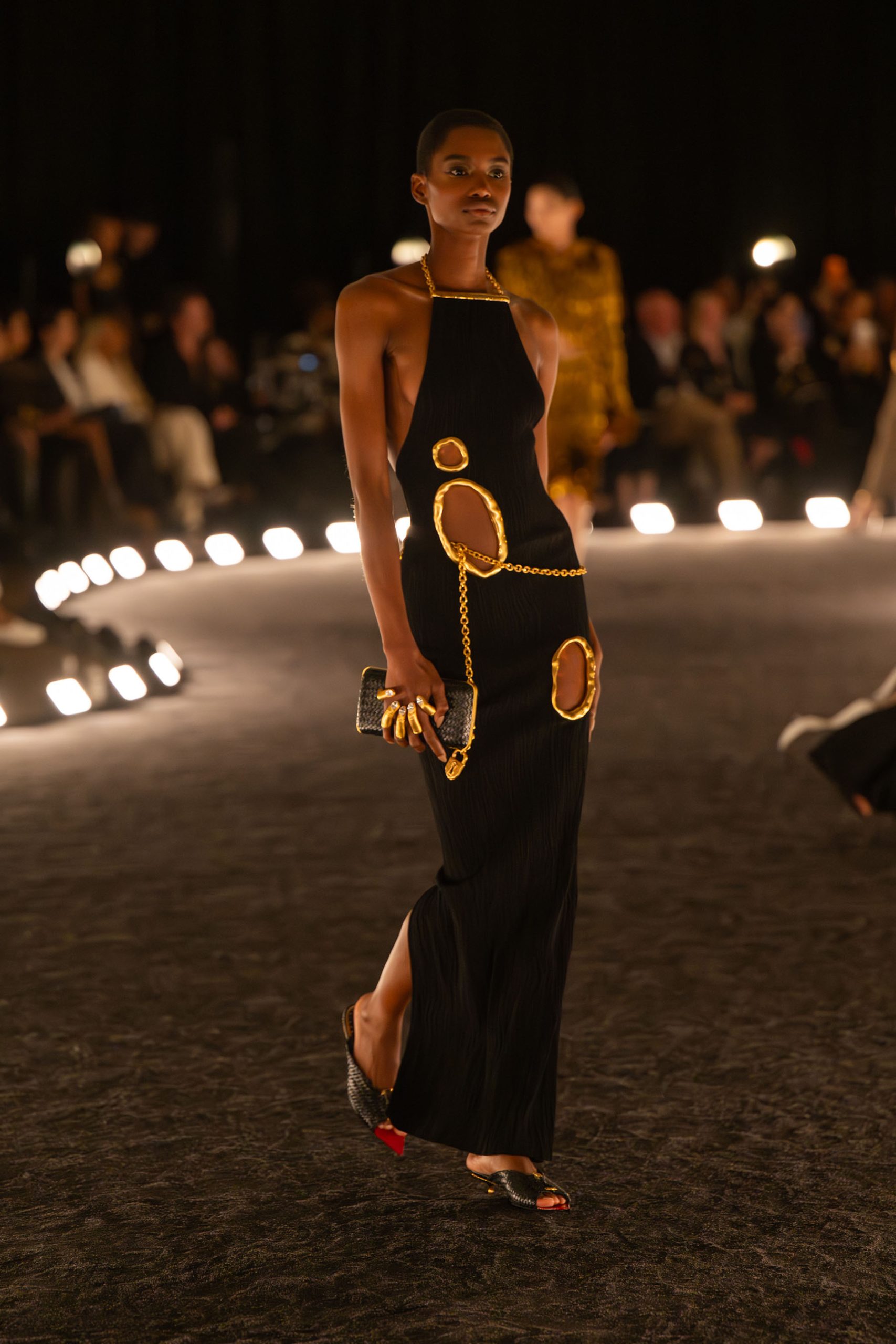
After my first prêt-à-porter collection, I often heard: ‘Is this prêt-à-porter? I thought I was watching haute couture!’ For a long time, I didn’t know what to make of that comment—it always felt like a criticism, as though creating ready-to-wear that aspired to be as extraordinary, as thoughtful, as couture was somehow a flaw. But six years into this chapter at Schiaparelli, what once felt like a disadvantage now feels like a strength. Who wouldn’t want to live inside a fantasy made wearable for everyday life? Why can’t fashion—even daily fashion—be art?
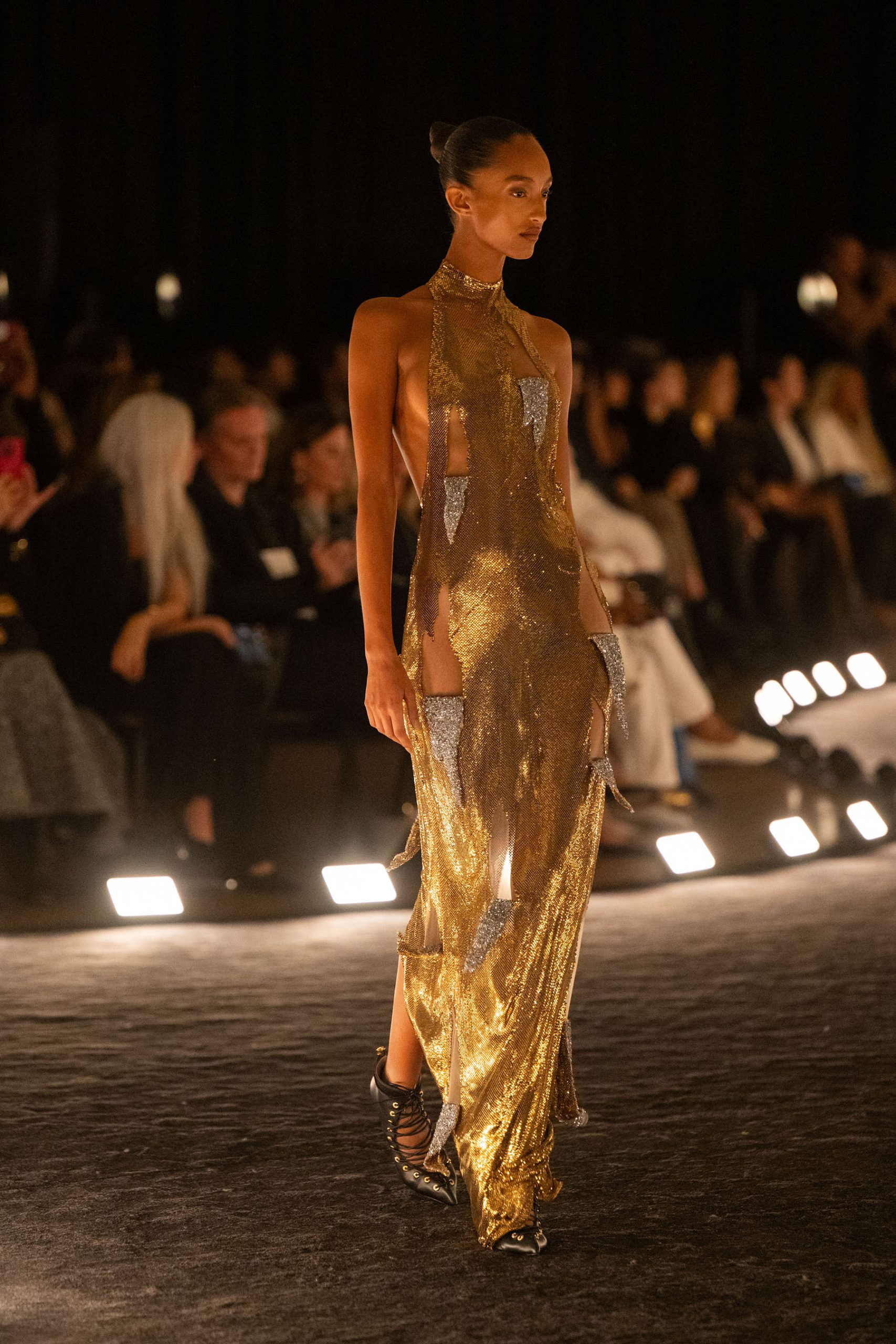
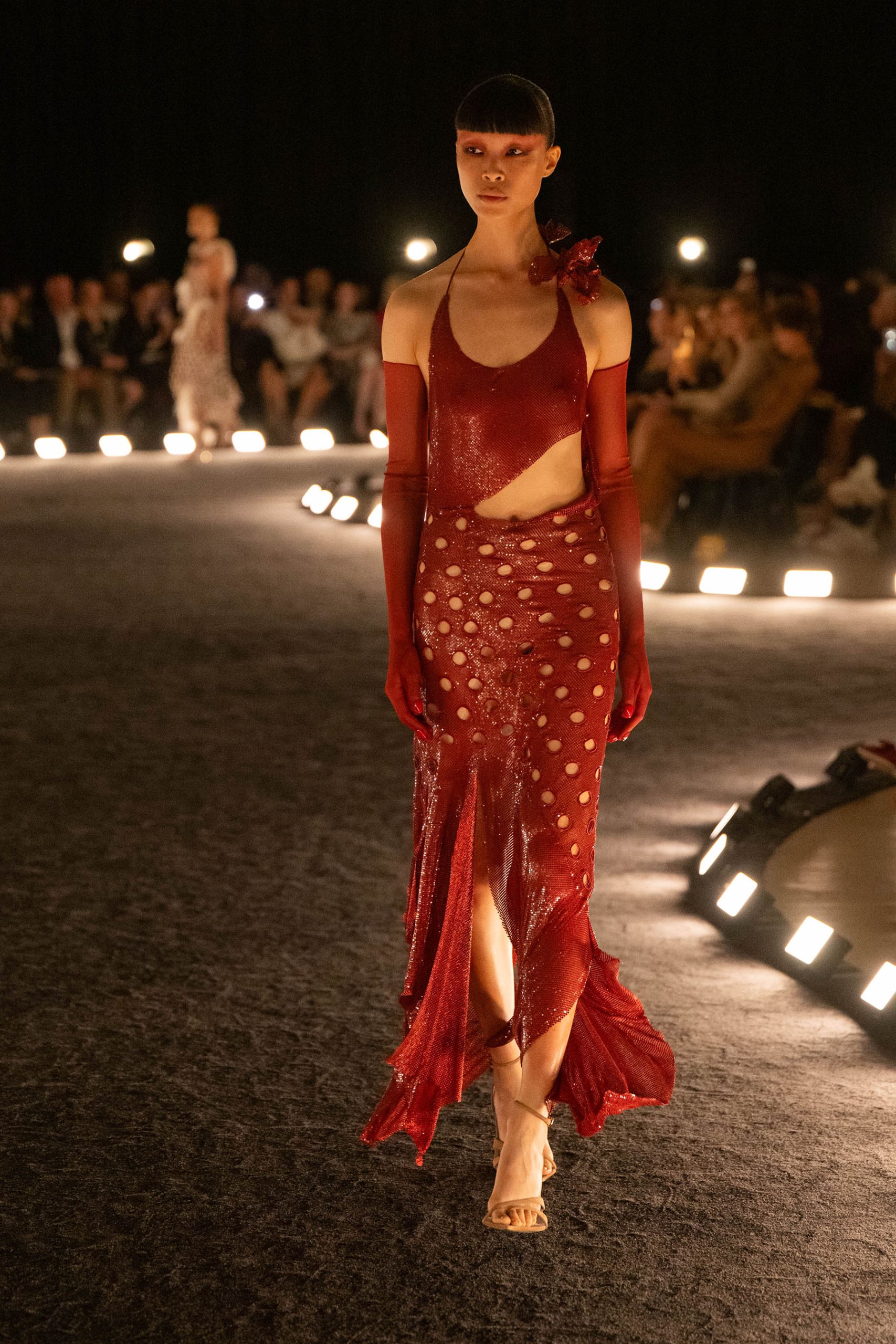
Today’s world can feel relentless, like a cultural black hole. The only thing we as creatives can do is hold on to what makes us feel good. The only thing we can do is move to the rhythm of our clients’ hearts. The only thing we can do is make clothes that give their wearer the freedom and ecstasy we ourselves long to feel: on stage for a brief moment, unashamed, dancing in the dark.”
Photos courtesy of Area Comunicación Global. All rights reserved. Copyright © 2025.


No Comments